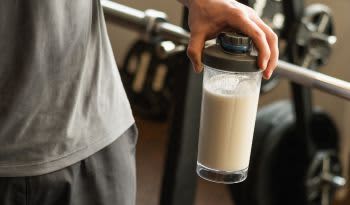
Despite consistent training, adequate sleep, and a reasonable diet, many individuals struggle to build muscle and gain weight. If you find yourself in this category, inadequate nutrition, specifically not enough calories and protein, is likely the culprit. This article will guide you through how to determine your caloric needs, the science behind surplus eating for muscle growth, what mass gainers are, and what the peer-reviewed literature says about their efficacy.
Determine Your Calorie Needs
A great starting point is to calculate how many calories your body requires daily. This baseline figure is referred to as your Total Daily Energy Expenditure (TDEE), which encompasses two primary components: your Basal Metabolic Rate (BMR) and the energy you expend through physical activity.
Calculating Your Basal Metabolic Rate (BMR)
Your BMR represents the number of calories your body burns at complete rest to sustain core physiological functions, including respiration, circulation, cellular repair, and thermoregulation.
One of the most widely validated equations for estimating BMR is the Mifflin-St Jeor equation:
- For Men (metric): BMR = (10 × weight in kg) + (6.25 × height in cm) − (5 × age in years) + 5
- For Men (imperial): BMR = (4.536 × weight in lbs) + (12.7 × height in inches) − (5 × age in years) + 5
- For Women (metric): BMR = (10 × weight in kg) + (6.25 × height in cm) − (5 × age in years) − 161
- For Women (imperial): BMR = (4.536 × weight in lbs) + (12.7 × height in inches) − (5 × age in years) – 161
Once you have your BMR, you multiply it by an activity multiplier to arrive at your TDEE. These multipliers are generally categorized as follows:
- Sedentary (desk job, little exercise): 1.2
- Lightly active (light exercise 1–3 days/week): 1.375
- Moderately active (moderate exercise 3–5 days/week): 1.55
- Very active (hard exercise 6–7 days/week): 1.725
- Extremely active (very hard exercise, physical job): 1.9
As an example, consider a 25-year-old male weighing 68 kg at 178 cm in height who exercises moderately four to five days per week. His estimated BMR would be approximately (10 x 68 kg) + (6.25 x 178 cm) – (5 x 25 years) + 5 = 1,673 kcal/day, and his TDEE would be roughly 1,673 X 1.55 = 2,593 kcal/day. This figure represents the threshold at which he maintains his current body weight. To gain muscle, he must consistently exceed this number.
Increase Caloric Intake by ~20% for Muscle Gain
Once your TDEE is established, the next step is creating a caloric surplus. The scientific consensus supports a moderate surplus — approximately 10–20% above maintenance — as the most efficient range for maximizing lean muscle gain while minimizing unnecessary fat accumulation.1
Using the example above, a 20% surplus above a TDEE of 2,593 kcal/day would require approximately 3,112 kcal/day. For many people, reaching this target through whole foods alone presents a significant logistical and appetite-related challenge. This is particularly true for individuals with small appetites, fast metabolisms, or demanding schedules that leave little time for frequent, calorie-dense meal preparation. This is precisely where mass gainer supplements become not merely convenient, but functionally necessary.
The Importance of Protein Within Your Surplus
The macronutrient composition of your calorie surplus also matters enormously. Current evidence-based recommendations suggest that individuals engaged in resistance training should aim for a dietary protein intake of 1.6 to 2.2 grams of protein per kilogram of body weight (0.73 to 1.0 grams of protein per pound of body weight) per day to maximize muscle protein synthesis and support hypertrophic adaptations.2
Consider a Mass Gainer Supplement
A mass gainer supplement is a specially formulated nutritional supplement designed to deliver a nutritionally dense source of calories, protein, and carbohydrates in a single serving. Unlike standard protein powders, which typically provide 20–30 grams of protein and 100–150 calories per serving, mass gainers are engineered to supply significantly higher quantities of both macronutrients and total caloric content — often ranging from 1,000 to over 1,500 calories per serving, depending on the specific product and serving size used.
Mass gainers are fundamentally different from simple protein shakes in that they are specifically calibrated to address the caloric surplus requirements of muscle growth. A well-formulated mass gainer provides a comprehensive macronutrient profile that contributes meaningfully to both daily protein and energy targets.
Who Benefits Most from a Mass Gainer?
Mass gainer supplements are particularly well-suited for the following populations:
- Individuals with high metabolic rates (often referred to as "hard gainers" or those with ectomorphic body compositions) often struggle to maintain a consistent caloric surplus through diet alone.
- Athletes or active individuals engaged in high-volume training regimens with elevated energy expenditure.
- Busy professionals or students who lack the time for multiple high-calorie, whole-food meals throughout the day.
Why Dairy-Based Proteins Dominate Mass Gainer Formulations
The protein sources used in a mass gainer supplement are not arbitrary. High-quality mass gainer formulations generally utilize dairy-derived proteins — most commonly milk protein and whey protein — for reasons that are well-supported in the sports nutrition literature.
Dairy proteins are considered nutritionally complete proteins, meaning they provide all nine essential amino acids (EAAs) in quantities sufficient to support muscle protein synthesis.3 More specifically, dairy proteins are exceptionally rich in the branched-chain amino acids (BCAAs) — leucine, isoleucine, and valine — which are the most anabolically potent amino acids involved in the activation of the mTORC1 signaling pathway, the master regulator of muscle protein synthesis.
Of particular importance is leucine, which functions as a direct molecular trigger for protein synthesis. Dairy proteins are among the highest naturally occurring dietary sources of leucine, typically providing 9–12% of their total amino acid content.4
Carbohydrates: The Overlooked Engine of Muscle Growth
A well-formulated mass gainer also provides a large quantity of carbohydrates, often ranging from 100 to 250 grams per serving. This is not incidental — carbohydrates serve as the primary fuel substrate for high-intensity anaerobic exercise. During resistance training, working skeletal muscle relies almost exclusively on glycolysis — the metabolic pathway by which glucose derived from dietary carbohydrates (stored as muscle glycogen) is converted to adenosine triphosphate (ATP) to power muscular contraction.
Carbohydrates additionally exert an important insulinotropic effect: carbohydrate ingestion stimulates insulin secretion, and insulin, in turn, suppresses muscle protein breakdown while facilitating the uptake of circulating amino acids into skeletal muscle cells. The combination of dietary protein and carbohydrates, therefore, creates a synergistic anabolic environment that exceeds what either macronutrient achieves in isolation.
A landmark study published in The Journal of Nutrition by Beelen and colleagues (2008) demonstrated compellingly that the co-ingestion of protein and carbohydrate stimulates whole-body protein synthesis during exercise by 29% and improves overnight recovery protein synthesis by 19%, even in subjects who had already consumed a standardized diet throughout the day.5 This finding underscores that the anabolic benefit of the protein-carbohydrate combination is additive and occurs over and above the baseline nutritional state.
How Mass Gainers Support Muscle Gain
Peer-reviewed clinical evidence supports the efficacy of mass gainer nutritional supplements in producing meaningful improvements in body composition and physical performance.
A randomized, double-blind clinical trial published in The Journal of Sports Medicine and Physical Fitness by Rozenek and colleagues (2002) investigated the effects of a high-protein mass gainer supplement containing 356 g carbohydrate and 106 g protein on body composition and muscular strength in 73 trained male subjects over an 8-week resistance training program.6 All participants followed an identical resistance training program. The high-calorie protein supplement group gained 2.9 kg (6.4 lbs) of fat-free mass, compared to only 1.4 kg (3.1 lbs) in the control group — more than double the lean mass gain. Total strength (combined 1RM on bench press, leg press, and lat pulldown) increased by 67.5 kg (149 lbs) in the supplement group versus 43.7 kg (96 lbs) in the control group.
How to Use a Mass Gainer Effectively
To derive maximum benefit from a mass gainer supplement:
- Calculate your TDEE multiplied by the appropriate activity factor, then establish a caloric surplus of 10–20% above maintenance.
- Use your mass gainer supplement to bridge the gap between your current dietary caloric intake and your daily bulking target. It should complement, not replace, a diet built around whole food sources of protein, complex carbohydrates, healthy fats, and micronutrient-dense fruits and vegetables.
- Consume your mass gainer in the peri-workout window — ideally within 30–60 minutes post-exercise — when muscle tissue is most primed to utilize the protein and carbohydrates for glycogen resynthesis and muscle protein synthesis.
- Ensure your total daily protein intake reaches the recommended threshold of 1.6–2.2 g/kg (0.73–1.0 g/lb) of body weight. Your mass gainer should contribute meaningfully to this target.
- Track your body weight weekly (under consistent conditions, e.g., in the morning before eating). Target a weight gain rate of 0.25–0.5 kg (0.5–1.0 lb) per week. If weight gain is slower, modestly increase calories by another 5-10%.
Conclusion
Gaining lean muscle mass is a process governed by fundamental physiological principles: an adequate caloric surplus, sufficient protein intake, structured resistance training, and appropriate recovery. For many individuals, the single most limiting factor is not motivation, training quality, or even protein intake — it is simply the inability to consistently consume enough total calories to support the anabolic demands of muscle growth.
Mass gainer supplements address this bottleneck directly and efficiently. By providing a concentrated source of high-quality protein and calories, mass gainers make it practically feasible to achieve and sustain the caloric surplus necessary for muscle hypertrophy.
References:
- Iraki J, Fitschen P, Espinar S, Helms E. Nutrition Recommendations for Bodybuilders in the Off-Season: A Narrative Review. Sports (Basel). 2019 Jun 26;7(7):154. doi: 10.3390/sports7070154. PMID: 31247944; PMCID: PMC6680710. https://pubmed.ncbi.nlm.nih.gov/31247944/
- Stokes T, Hector AJ, Morton RW, McGlory C, Phillips SM. Recent Perspectives Regarding the Role of Dietary Protein for the Promotion of Muscle Hypertrophy with Resistance Exercise Training. Nutrients. 2018 Feb 7;10(2):180. doi: 10.3390/nu10020180. PMID: 29414855; PMCID: PMC5852756.https://pmc.ncbi.nlm.nih.gov/articles/PMC5852756/
- Jäger R, Kerksick CM, Campbell BI, Cribb PJ, Wells SD, Skwiat TM, Purpura M, Ziegenfuss TN, Ferrando AA, Arent SM, Smith-Ryan AE, Stout JR, Arciero PJ, Ormsbee MJ, Taylor LW, Wilborn CD, Kalman DS, Kreider RB, Willoughby DS, Hoffman JR, Krzykowski JL, Antonio J. International Society of Sports Nutrition Position Stand: protein and exercise. J Int Soc Sports Nutr. 2017 Jun 20;14:20. doi: 10.1186/s12970-017-0177-8. PMID: 28642676; PMCID: PMC5477153.https://pmc.ncbi.nlm.nih.gov/articles/PMC5477153/
- Auestad N, Layman DK. Dairy bioactive proteins and peptides: a narrative review. Nutr Rev. 2021 Dec 8;79(Suppl 2):36-47. doi: 10.1093/nutrit/nuab097. PMID: 34879145; PMCID: PMC8653944.https://pmc.ncbi.nlm.nih.gov/articles/PMC8653944/
- Beelen M, Tieland M, Gijsen AP, Vandereyt H, Kies AK, Kuipers H, Saris WH, Koopman R, van Loon LJ. Coingestion of carbohydrate and protein hydrolysate stimulates muscle protein synthesis during exercise in young men, with no further increase during subsequent overnight recovery. J Nutr. 2008 Nov;138(11):2198-204. doi: 10.3945/jn.108.092924. PMID: 18936219. https://pubmed.ncbi.nlm.nih.gov/18936219/
- Rozenek R, Ward P, Long S, Garhammer J. Effects of high-calorie supplements on body composition and muscular strength following resistance training. J Sports Med Phys Fitness. 2002 Sep;42(3):340-7. PMID: 12094125. https://pubmed.ncbi.nlm.nih.gov/12094125/
DISCLAIMER:
These statements have not been approved by the Food and Drug Administration. These products are not intended to diagnose, treat, cure, or prevent disease.

























































 Table of Contents